• Master
    12 Jan 2012, 5:57 p.m.

    superiorwatch.com/scans/C5000 calibres.jpeg

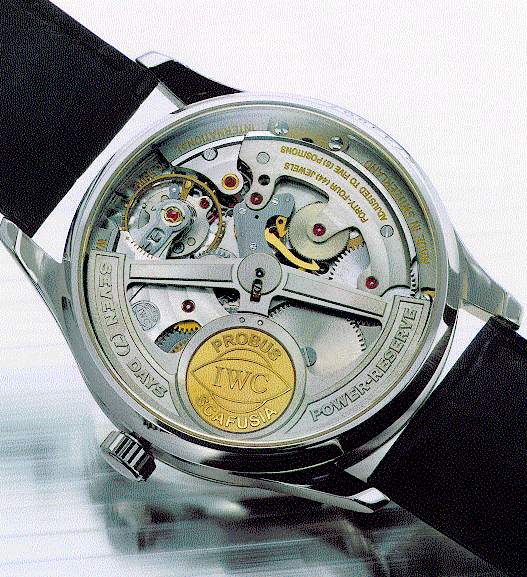
    On the TZ forum a reader posted a question regarding a C5000 movement that looks different and wondered what's behind it?

    In my earlier post on that forum I thought that the movement shown (above left) might have been altered on the outside because I haven't seen one like it before.

    However, on second look, I realized that the bridge looked authentic and so I contacted a colleague at IWC to get the real facts. I was informed that the picture (above left) shows the first edition of the caliber 5000 which has been used only in the limited edition reference 5000, Portuguese Automatic 2000.

    Some parts of this first construction were found by the IWC technicians to be eligible for modification. One of these parts was the differential bridge which, during a factory service, the watchmakers replace with the newer current ones now found in these 7-day timepieces (right photo above).

    Regards,
    Jack Freedman

  • Master
    12 Jan 2012, 7:06 p.m.

    One bridge leaves gears hidden and the other exposed. Since the 5000 works as per original issue, does changing it make it more in synch with 5001 models but without date? Or is there some benefit to be gained by the change?

  • Master
    12 Jan 2012, 7:25 p.m.

    Greg,

    The technical "explosions" I have from IWC for all their C50xxx calibres show only the newer larger size bridge which covers the wheels. Though I've never seen the vintage calibre at my company's service center I can only speculate that the newer version ensures smoother winding between the manual and automatic mechanism.

    Regards,
    Jack Freedman

  • Master
    12 Jan 2012, 8 p.m.

    Here's a picture taken by MF's article: "IWC's new calibre 5000"

    people.timezone.com/mfriedberg/5000mvt.jpg

    Aside the robustness given by the wider bridge, could it be the exposure of the crown wheel was simply ugly to see? Ref. 5000 has a see through case-back after all.

    Thanks for posting!

  • Master
    12 Jan 2012, 8:56 p.m.

    Jack, thanks for that. On another matter, Jack could you email me please regarding a bit of help needed, horological help that is. Many thanks.

  • Master
    12 Jan 2012, 9:16 p.m.

    could it be the exposure of the crown wheel was simply ugly to see?

    Though I'm not a technical engineer I have compared the construction of both version crown wheels and here's my personal observations:

    The early vintage crown wheel had a left threaded screw (like many old vintage calibres). The new version crown wheel is held in place first with a collar and then a normal threaded screw as shown with the arrow in this photo.

    superiorwatch.com/scans/C5000 modified.jpeg

    IMHO, the modification of the bridge is not merely aesthetic but adds to the technical side of making a more secure contact between the winding wheels.

    Regards,
    Jack Freedman

  • Master
    12 Jan 2012, 9:35 p.m.

    Jack, I would say your last post is spot on. Makes perfect technical sense!

    Thanks for sharing this info.

    Roberto, you too are correct Sir - the larger bridge certainly improves the looks of the movement.

    Best regards
    Mark

  • Master
    12 Jan 2012, 10:27 p.m.

    I agree with my friend Mark.

    Compatibly to your obligations, you should post more often Jack.

  • Connoisseur
    14 Jan 2012, 2:15 p.m.

    Thank's for this post! Very interesting to read and to learn things like this!

    Fredrik

  • Master
    14 Jan 2012, 6:20 p.m.

    Word!...It is always interesting and a pleasure to see your posts, Jack!