Greetings,
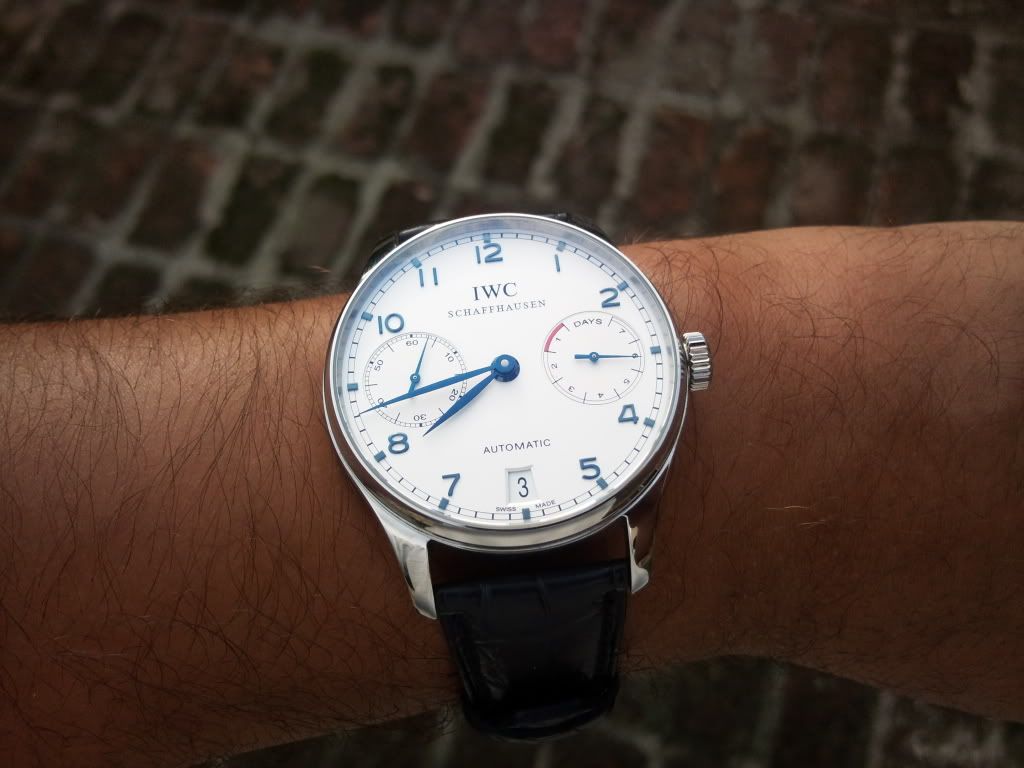
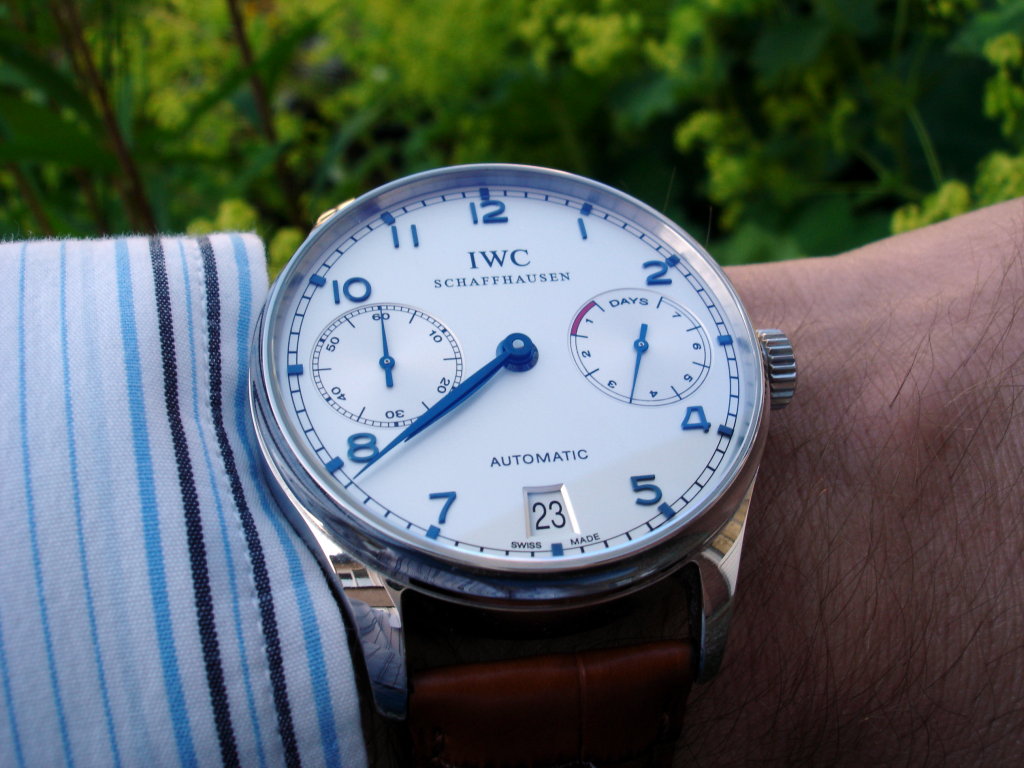
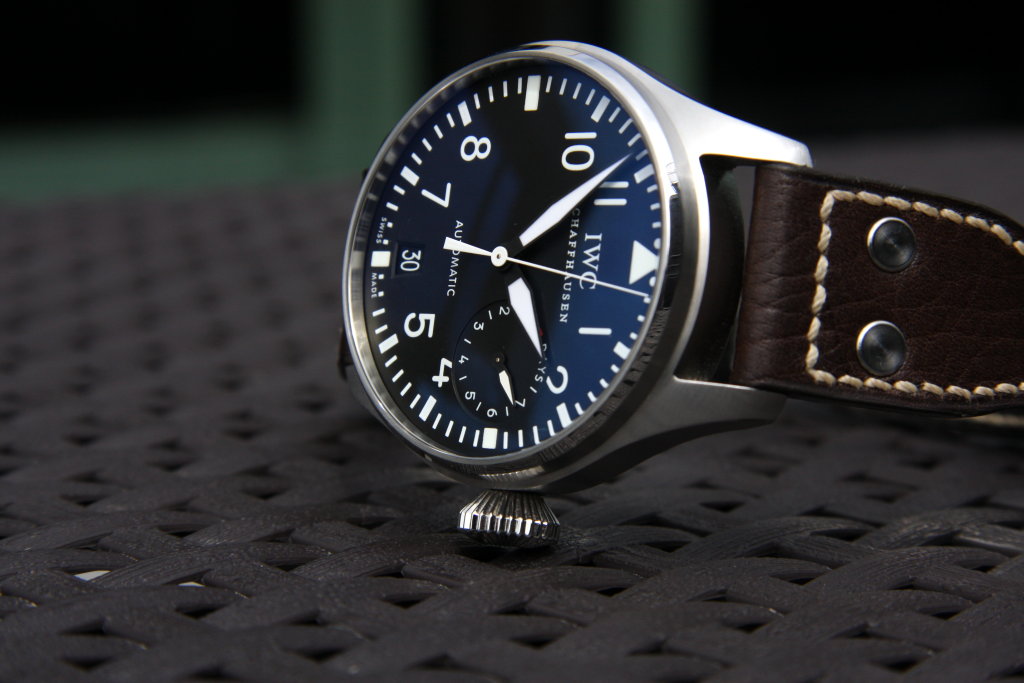
When IWC announced its revolutionary Calibre 5000 –its first in-house automatic in years-- in 2000, the movement contained several special features, including a seven-day power reserve. Some people were intrigued, since the watch would have a week's “autonomy”, and for example it would be “set to go” if perhaps just worn on weekends. Others scoffed at the notion of an automatic with a seven-day power reserve. They understood why a lengthy reserve would be useful on a manual watch, but not on an automatic which should stay fully wound when worn.
IWC also did something unusual to create the lengthy autonomy: it used a huge barrel, specially coated, and had an enormously long mainspring inside. It was a simple solution, in a sense, since the long spring would take longer to unwind. This was unlike what some other watch manufacture's then did –such as using two smaller barrels, in one watch, that would run in tandem. Kurt Klaus told me 10 years ago that IWC's design was simpler and, therefore, there was less to go wrong.
But –did IWC make a mistake? The huge barrel needed for the lengthy mainspring takes up a lot of space, and requires a large movement (and correspondingly a very large watch). Some have argued that the pressure from such a large mainspring as it unwinds creates greater isochronism error –that is, accuracy can be affected, and even a few seconds can make a difference. Or do we really need 7 days' power reserve? For normal use, isn't 36 or 78, or even 72 hours enough?
Still, the feature is useful and distinctive. Perhaps IWC not only didn't make a mistake but also accomplished something important.
What are your thoughts?
Regards,
Michael