• Master
    2 Aug 2015, 6:39 p.m.

    Some of IWC pocket watches gut juste steel cases, either for functional or for cost reason.

    Steel was always an used case material.
    - Initially it was oxidated steel.
    - there was also a nickel/copper alloy called "silveroid" (not steel) having
    a shiny surface.
    - later a new, more oxidation resistive alloy came up.

    This stainless steel (Mechanical people call it 18/8 or 1.4301, watchmakers name is 301) was initially called "staybrigt".
    You can find this name in steel watch cases of IWC (and other watch brands).

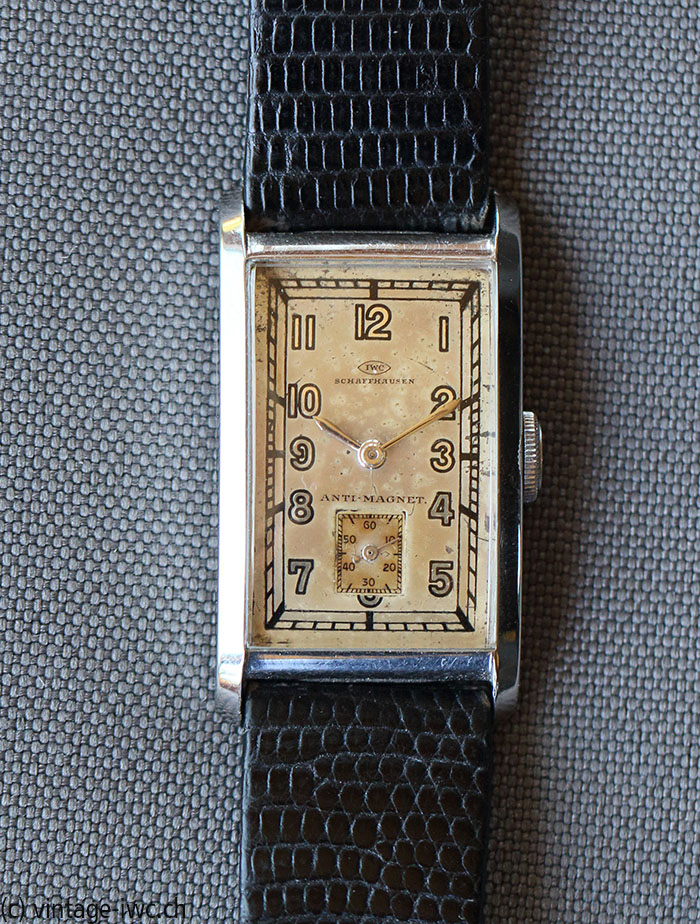
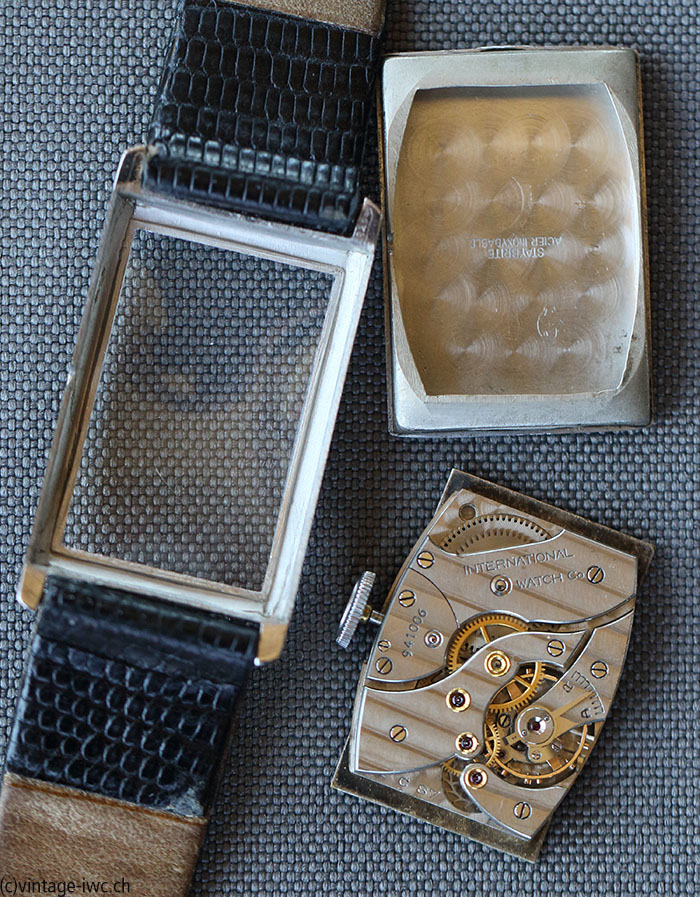
    It is interesting, to find out, which is the first "staybrigt" watch case for a pocket watch and also for a wrist watch IWC sold.

    Here a fully steel PW-selection all with a different movement. (one or two calibers which can be found in steel cases) are missing, as the watches are actually the safe)
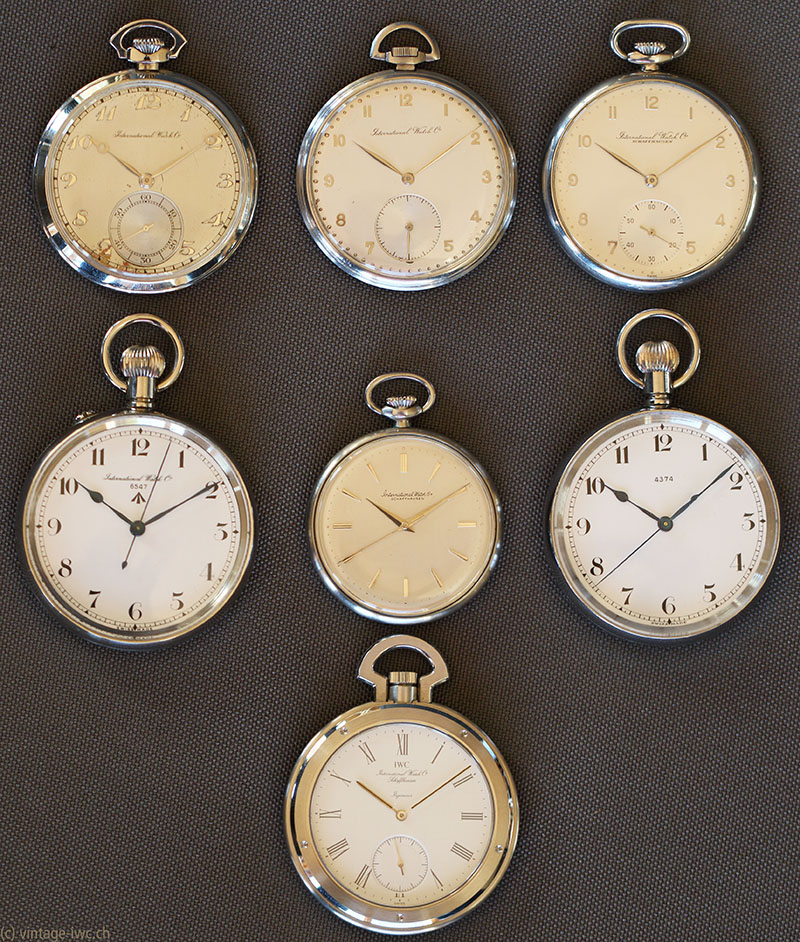
    www.vintage-iwc.ch/bilder/steel_work.jpg

    So please post here early staybrigt case numbers (< 1'000'000)

    kind regards

    Ralph

  • Master
    2 Aug 2015, 7:02 p.m.

    Great post again, Ralph.

    I could learn again, thanks.

    And I can add the MODERN steel PWs :-)

    Regards

    HEBE

    derjonk.de/lizard/steel-dial.jpg

    derjonk.de/lizard/steel-cal.jpg

  • Master
    2 Aug 2015, 7:53 p.m.

    Thank you Ralph and Heiko,
    Great information, great photo's.
    Kind regards,
    Adrian,
    (alwaysiwc).

  • Master
    2 Aug 2015, 8:10 p.m.

    Interesting! So of course there is a development in the kind of steel used, from early days to the present: I wonder what this development is, why the new materials were chosen. As I understand, the present steel is about the same everywhere (but I could be wrong of course), with the exception of the steel used by Rolex, that seems to be superior, but I don't know on what aspects.

    I like the workhorse concept. I more and more see myself wearing my steel and titanium watches, and the beautiful gold watches stay in the box: I have to work on this!

    Kind regards,
    Paul

  • Master
    2 Aug 2015, 10:10 p.m.

    The actual steels are a bit different.
    The initial alloy was to har, it had to be machined to make cases. So they could not be used in metal forming, an important fact to use less steel (when you already give a certain shape by metal forming, you dont need to machine out a curved case of 1 big piece of metal)

    The Stybrigt DDQ was an alloy having better forming characteristics, but less corrosion resitive. (This alloy was used a long time by many swiss case makers till the 1960's, when modified alloys came up. (304L,316L)

    The steel Rolex is using 904L. But this steel has mechanicaly and at room temperature the same characteristics. It's an alloy used in chemical industry and more resistive in extreme environment, but who is storing his watch in boiling sulfuric acid. I think this is more a PR Gag than a practically need.

    The actual ally used today for cases is approx 316L (1.4435 = X 2 CrNiMo 18 14 3). But there are many similare steels close to "316L".

    Finally I am not really the expert in alloys....

    regards

    Ralph

  • Master
    3 Aug 2015, 9 a.m.

    Thank you, Ralph, I appreciate your information. In 1968 I got a steel Omega Seamaster De Ville. After a few years it gave me a skin rash, apparently a nickel allergy. It chased me away from steel watches for quite some time: titanium, and later gold, were the case materials for me. Then I learned that the new steel for watches was low enough on nickel. In 2008 I took the plunge, the steel Vintage Collection Portuguese was my first steel watch in 40 years! And luckily no rash anymore, it now is one of my favourite watches.

    Kind regards,
    Paul

  • Master
    3 Aug 2015, 10:35 a.m.
  • Master
    3 Aug 2015, 12:08 p.m.

    As i write, there are also wrist watches, here a sample with a nice tonneau movement c.87.
    On those cases the serial number was on the back, here 969'482.

    www.vintage-iwc.ch/bilder/c87_staybrite.jpg

    www.vintage-iwc.ch/bilder/c87_staybrite_back.jpg

    Regards

    Ralph

  • Connoisseur
    4 Aug 2015, 2:23 a.m.

    My question is: what was the first steel cased watch produced by IWC?

    Does a gun metal case qualify? If so, weren't there some calibre IWCs from the 1890s in gun metal?

  • Master
    4 Aug 2015, 3:37 p.m.

    Hello Michael

    I am seeking for the earliest stainless (stybrite) steel watch cases of a PW and a WW. so this time the gun metal cases do not qualify for the "competition"... (they are much earlier, but I think I have not seen a Jones in a gunmetal case, but maybe Seeland could be)

    kind regards

    Ralph

    Kind regards

  • Insider
    5 Aug 2015, 10:56 a.m.

    I cannot contribute to the Staybrite discussion but only to Michael's side remark. I own a pocket watch in a Borgel steel case which was sold to Italy
    on July,25 1893.

    Rolf

  • Master
    5 Aug 2015, 2:12 p.m.

    Wow, that's a really old one! One of the earliest?
    I really admire IWC's pocket watch heritage. Probably it is time to get in this business now. It's so fascinating.
    I guess the silver cased pocket watches today are as cheap or even cheaper than the steel cased ones.

  • Master
    5 Aug 2015, 9:51 p.m.

    It is probably not the first one but on of the first ones.
    François Borgen started 1891 to produce this type of case (Screwed in from the front), there could be earliers....

    A Borgel case was more expensive than the normal cases, but I think a oxidated steel case was always less expensive than an identical sterling case.
    Maybe a Borgel oxidated steel case had about the same price than a normal sterling silver case.

    Kind regards

    Ralph