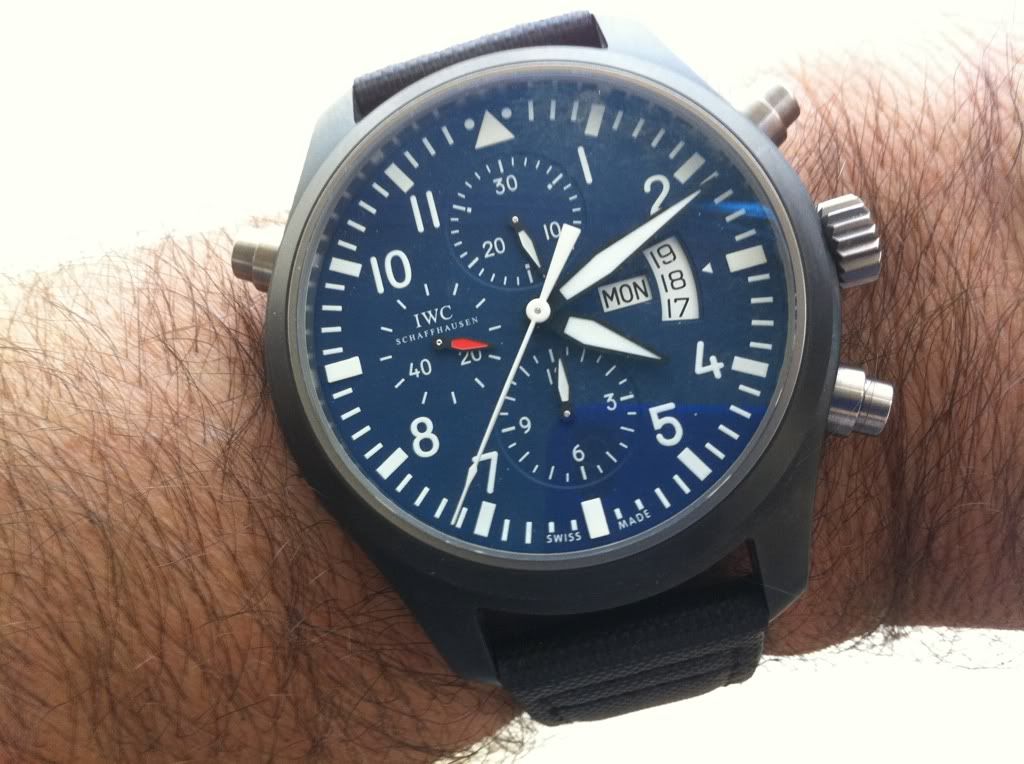
Hi Greg,
Whilst I have not had experience with a watch case made out of the materials in relation to your question, I was a machinist in a previous life and if memory serves me correctly, one of the properties of Titanium is its greater resistance to cracking, fracturing and work hardening due to its ability to disperse energy better - if it receives a knock, it absorbs the energy across the entire body rather than at the single point of impact - once of the reasons other than weight that it is used in high vibration environments like aircraft. There are known issues with machining it whereby you can induce work hardening in the turning / milling process but these are known issues and overcome easily with the correct processes.
Gold, and the alloys of gold (anything less than 24k) are also generally a very maleable material, meaning they are soft and also disperse energy very efficiently - it is this same property of gold being able to disperse energy that makes it very useful as an electrical conductor. Alloys with high copper content (Red / Rose Gold use copper but I dont think in ratios high enough) can work harden to the point that they can fracture / break but the whole process of work hardening is a long / repetitious one - you would have to drop / knock the metal quite a lot to induce work hardening by which time your crystal will be gone, your hands will have fallen off, your movement that originally had 273 components in it now has 546 and they are floating all about . . . .
I dont have any experience with Platinum so cant comment on that one. You will find that with most of the precious metals, they are alloyed with other metals because they are very soft / maleable materials and the addition of the other metals in the alloy serves to strengthen them, make them more ridgid, less susceptible to rust (in the case of stainless steel), easier to machine, change the colour etc but you really have to try to make a brittle material - tungsten carbide for example is very tough material, highly scratch and wear resistant, but highly susceptible shattering, fracturing much like ceramic - unfortunately no one has yet found the material that is strong (both in torsion and tension), wear resistant, light, impact resistant etc etc etc and there is always a trade off in materials science.
Cheers,
Ben