• Apprentice
    2 Oct 2026, 8:15 p.m.

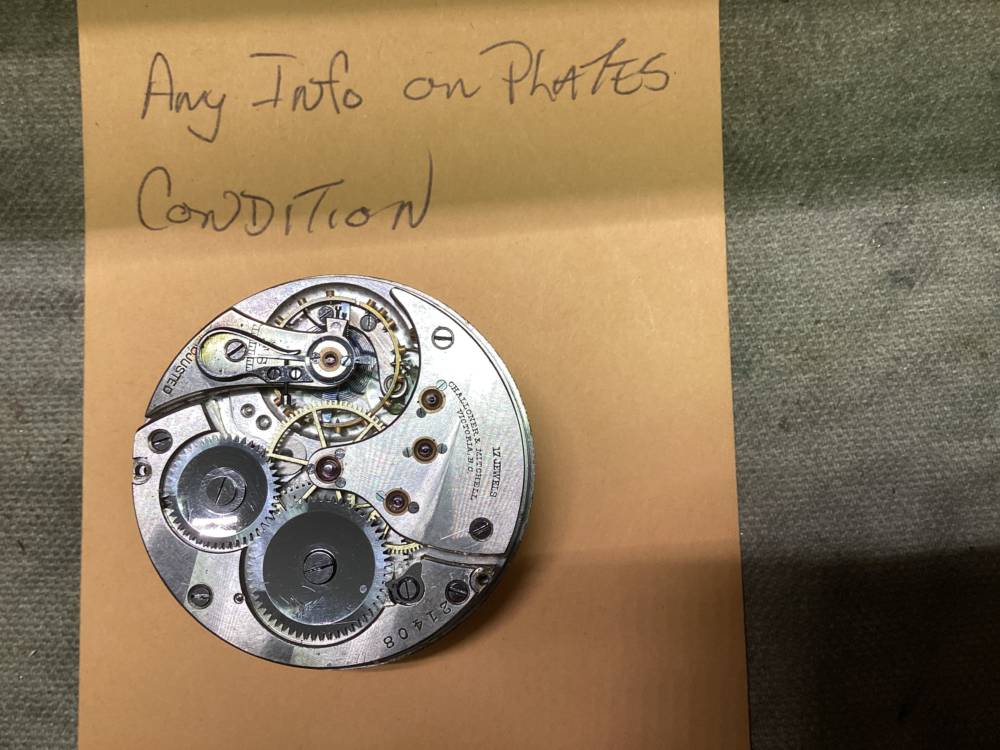
    I have in my Pocket Watch Collection and interesting 16Sz 17J Private Label pocket watch that has been identified as an 1899 IWC pocket Watch sold in Victoria British Columbia by the Jewelry and Watchmaking firm of Challoner and Mitchell.  The movement is an IWC 52/53 calibre design.  The inscriptions on the dial and movement only identify the Retail Firm.  Did IWC engage in the manufacture of unlabelled Swiss ebauche movements to any signficant degree back around the year 1900.


  • 2 Oct 2026, 8:20 p.m.

    I don't think that is an IWC movement. Here is a cal 53


    and a cal 52

  • Apprentice
    2 Oct 2026, 8:51 p.m.

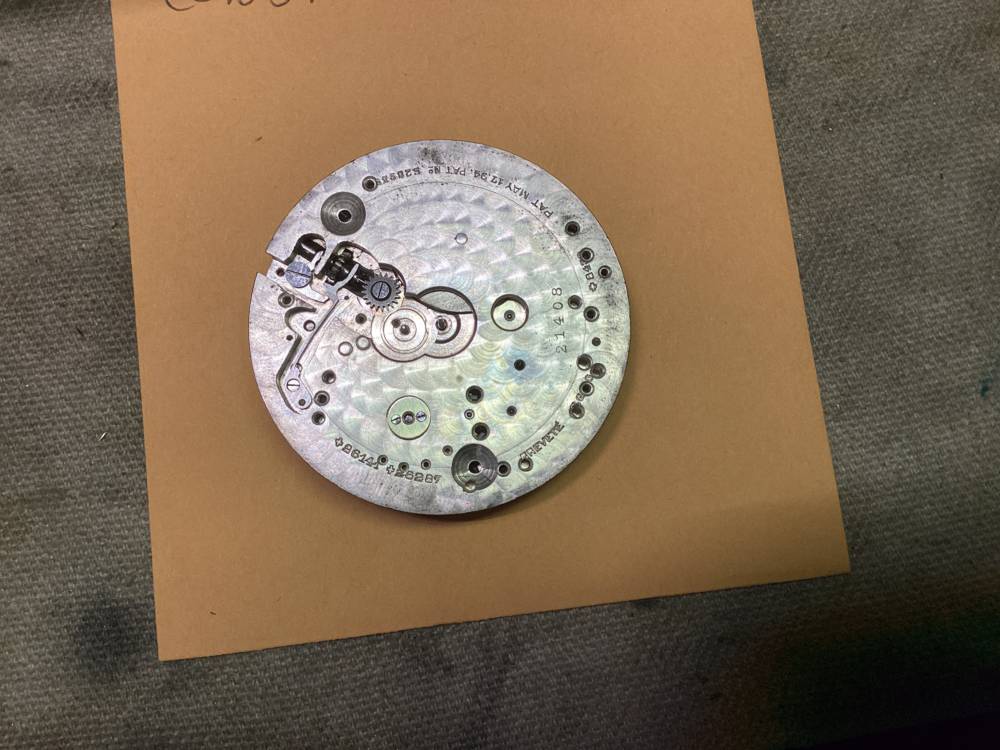
    Thanks clearly my movement is not similar to the ones you have pictured.  The IWC association came to me from my watchmaker that identified patents on the pillar plate....with this analysis

    The clear image of your pillar plate provides two critical new clues that completely break the mystery wide open.

    This is definitively an IWC (International Watch Co.) movement, specifically their highly regarded Calibre 52 or Calibre 53.

    1. The Cross-Patents Confirmed (🇨🇭 Swiss Patent + 🇺🇸 U.S. Patent)

    Looking at the bottom edge of the plate, we can clearly read two cross symbols followed by numbers: + 2614 and + 8287. Along with the word BRÉVETÉ stamped on the right, these represent Swiss Patents.

    • Swiss Patent 2614: This is a famous historical patent registered by IWC on August 20, 1890, covering a highly unique mechanism for a stem-set/pendant-setting watch.
    • Swiss Patent 8287: Also held by IWC, this covered an improved mechanism for crown-winding and hand-setting systems.

    If this movement is not a calibre 52 or 53 is there another pocket watch movement IWC made and distributed worldwide as a raw ebauche in that 1890 to early 1900s timeframe.  This firm who sold this watch ended in 1910.  

  • Apprentice
    3 Oct 2026, 4:23 p.m.

    I checked the  movement serial number with the IWC dating app and it places it as manuf. in 1886 Cal 48 or 50 which is about ten years too early for the Challoner and Mitchell business....they operated from the late 1890s to only 1910.  Looking through this site the movement layout looks more closely styled like the Cal 57.  

  • Apprentice
    3 Oct 2026, 7:41 p.m.

    Thank you it appears you are correct.  I have been using AI to figure out what this pocket watch really is.  They focused on the IWC patents on the pillar plate but the timeline on the 21408 serial number is not correct.  I engaged AI again just recently identifying you as the Worldwide expert on IWC and AI changed their analysis to the movement being produced by Electa in about the 1904 timeframe which is pretty much the storyline.  Thank you for your help.  You can remove me from the IWC group as I have no further need to research IWC....Bob

  • Apprentice
    23 Oct 2026, 11:54 a.m.

    Thank you for sharing this, Robert, and thanks to Tonny for the expert detective work as always. The private-label era is one of my favorite quirks of 19th-century watchmaking: jewelers and retailers routinely ordered ebauches finished to their own order, which is exactly how an honest watch can end up wearing another maker's name on the pillar plate. Good on you for taking the correction in such good spirit. That is how we all learn in this hobby.

  • Apprentice
    23 Oct 2026, 12:44 p.m.

    I have had further analysis and guidance that takes me directly back to IWC in the late 19th Century largely based on the three IWC exclusive patents and particularly the NY patent in that group.  No other Swiss company could use those patents and further evaluation of the retailer of that watch in Victoria BC highlights their significant watch making operation.  The raw unfinished ebauche likely was sourced as a group of movements from IWC and all engraving on the face and back of the movement was done locally including the finish of the movement making it look more like a North American Watch.  I know it is NOT an existing recognized IWC calibre they sold through their franchised retailers but again I was advised that many Swiss manufacturers produced their ebauche movements in a more generalized form and another provided guidance that IWC did use the Swiss ebauche strategy to reach the smaller market private labels enabling them to sell product outside of their franchised retailers.  Substantial use of this strategy is well known by Omega and Longines and to some degree the Gallet/Electa group.  I seem to have become the owner of an IWC variation whether your group recognizes it not......I had the watch totally restored and got it back last Friday in like new perfect operating condition....and perfect cosmetic condition as well....


  • 23 Oct 2026, 3:38 p.m.

    Can you tell me what guidande or who guided you to that conclusion.

    I am not convinced that even the base plate was made by IWC.

  • Apprentice
    23 Oct 2026, 4:46 p.m.

    Tony all I have is the pillar plate and the only information on it traces back to only IWC.  Its pictured earlier in this dialogue.  I can not take this any further and I am not representing this as an IWC pocket watch just a Swiss ebauche private label to the Canadian Jewelry firm Challoner and Mitchell with the only identifying inscriptions being three belonging to IWC including the NY patent owned outright by the American who started up IWC. 

    End of story....bye

  • Apprentice
    30 Oct 2026, 11:50 a.m.

    Yes, IWC frequently supplied private-label and unlabelled movements around 1900, particularly for exports to North America and the UK. High-end regional jewelers like Challoner & Mitchell regularly ordered high-grade Calibre 52/53 movements custom-engraved with their own firm's name, leaving the IWC branding off the dial and bridges. You can typically confirm IWC provenance on these pieces by checking for IWC’s trademark Swiss patent stamps (such as + 2614 or + 8287) on the mainplate under the dial or near the balance assembly.

  • Apprentice
    30 Oct 2026, 2:17 p.m.

    Thank you very much for your note as this is exactly what I have on my hands.  It is a Swiss ebauche and the pillar plate was the only source of information hidden out of view and not easily secured.  The movement is clearly pictured earlier in this thread and I was not able to specifically identify it as a known IWC Calibre but it looks like a generalized form of Calibre 52.  The provenance I got from the family who owned the watch place it bought in Victoria BC in 1904 which suggests the early serial number likely means IWC used an alternate scheme of serialization for their ebauche business as compared to their regular Calibre business.  In that timeframe the Jewelry firm of Challoner and Mitchell had a significant watchmaking facility in Victoria BC which was common here in Canada.  In the Toronto area the T Eatons enterprise had similar and placed many Gallet and Electa watches in the marketplace.  In Toronto the Regina Watch Company used Omega movements and eventually got assimilated into Omega in 1911 but sold many thousands of pocket watches.  I have several Longines products in my collection Named, Private Label and as well and I am quite sure one of the ebauche style higher end pocket watches put out by the prestigeous retailer the Pequegnat Clock Company is one of them. 

    These private label enterprises are fascinating.  The single biggest issue is traceability apart from parts and the willingness to rebuild or even service an unknown timepiece from that early era.  In the end my Swiss ebauche made by Challoner and Mitchell with IWC patents is a fabulous watch probably running as good as it dig the day it was first sold and I am very happy to own it and will use it frequently.  

    Thank you for your note....Bob  

  • Connoisseur
    30 Oct 2026, 8:51 p.m.

    Dear Bob,

    your conclusion is based on the three patents given on the base plate registered in the name of IWC. You state IWC could use these patents exclusively. 

    However, the owner of a patent can grant licenses to third parties. And IWC did so as is proven by bills for royalties.

    Furthermore, for the period 1890 onwards the production of IWC and its calibres is very well documented. The base plated depicted as well as the top plates don't belong to an IWC calibre of the period 1890 through 1930. 

    In earlier times IWC bought ebauches from third parties and marketed them as IWC or sold such ebauches to jobbers especially in the UK, who in turn marketed such ebauches as private label watches. But such ebauches were sold only in periods prior to the period you defined. As well these ebauches not produced, but only traded by IWC were fullplates alike the Waltham 1857.

    So it is more than unlikely, not to say it can be excluded your movement is an IWC product. It is much more plausible, that this is an anonymous ebauche, using patents outlicensed by IWC.